
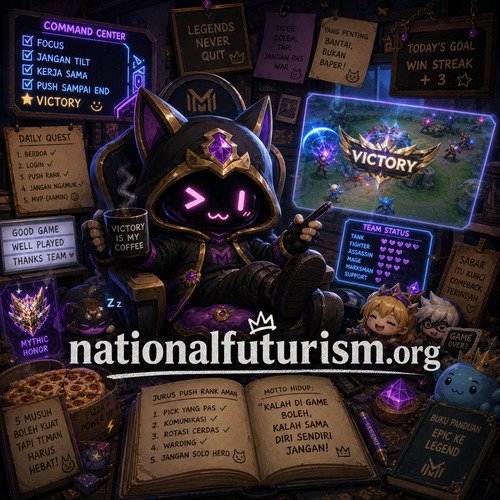
nationalfuturism.org – The rise of competitive mobile gaming has changed how people view smartphone entertainment, and one title that stands at the center of this movement is Mobile Legends: Bang Bang. Developed by Moonton, the game has become one of the most popular multiplayer online battle arena experiences in the world. It attracts players because it offers a combination of fast-paced action, teamwork, and strategic decision-making that can be enjoyed in relatively short sessions.
At a glance, the game appears easy to understand. Two teams enter the battlefield, choose heroes, and attempt to destroy the enemy base. However, this simplicity hides a much deeper competitive system. Success depends on understanding not only hero mechanics but also objective control, lane pressure, item progression, and communication. Players who overlook these aspects often struggle even if they have strong individual skills.
One of the most important lessons for improvement is realizing that Mobile Legends is not just about defeating opponents. Eliminating enemies can create opportunities, but the real purpose of every action is to gain control of the map and destroy objectives. This distinction separates experienced players from beginners.
The Essential Systems Behind Every Match
Each match in Mobile Legends: Bang Bang takes place on a map divided into three main lanes. These lanes connect both bases and are separated by jungle areas. Along each lane are towers that must be destroyed before reaching the final crystal.
The Gold lane is usually assigned to heroes that depend heavily on items, particularly Marksmen. Because this lane provides additional gold, it helps these heroes become stronger during the late game. The EXP lane offers faster leveling and is commonly occupied by Fighters who benefit from early access to upgraded abilities.
The Mid lane is central to the map. Heroes placed there can rotate quickly to support either side lane, making this position highly influential. Mages usually take the Mid lane because they can clear waves quickly and assist teammates efficiently.
The jungle provides neutral monsters that grant gold, experience, and buffs. These buffs are especially important for heroes such as Assassins who rely on strong ability usage. Controlling the jungle often determines which team gains an economic advantage.
The Turtle and Lord are the two most valuable neutral objectives. The Turtle gives an early boost in resources, while the Lord becomes a powerful ally that helps push lanes and pressure defenses. Teams that secure these objectives regularly often control the pace of the game.
Hero Roles and Team Balance
The game’s hero system is built around several major roles.
Tanks are the frontline defenders. Their job is to absorb damage, initiate team fights, and protect allies.
Fighters are durable heroes capable of both dealing and surviving damage. They often control side lanes and can adapt to many situations.
Assassins specialize in burst damage and mobility. Their role is to eliminate fragile but important targets, especially Marksmen and Mages.
Mages provide magical burst damage and crowd control. Their area-based abilities are crucial during objective contests.
Marksmen are the primary late-game damage dealers. They rely on efficient farming and safe positioning but become extremely powerful once fully equipped.
Supports help allies through healing, shields, and utility skills. Their impact is often subtle but essential.
A well-balanced team usually performs better than one built only around offensive heroes.
Match Stages and Priorities
A match generally moves through three stages.
The early game focuses on farming, lane control, and securing the first Turtle. Players should prioritize resources over risky combat.
The mid game begins when players rotate more frequently and towers start falling. This phase often determines overall map control.
The late game is the most dangerous stage. Death timers are long, and one lost team fight can decide the match.
Developing Better Habits
Many players slow their improvement by constantly changing heroes. While experimenting can be enjoyable, true progress usually comes from consistency.
Mastering a small hero pool allows players to understand cooldowns, damage ranges, and item interactions in much greater detail. This leads to stronger performance.
Choosing heroes that fit personal playstyle also helps. Aggressive players often prefer Assassins or Fighters. Strategic players may excel with Mages or Supports. Defensive players often perform best with Tanks.
Learning one hero from several roles remains useful for flexibility during draft selection.
Farming and Resource Efficiency
Gold is one of the most important hidden factors in the game. Heroes become stronger through items, and items depend on efficient farming.
Strong players consistently clear minion waves, secure jungle camps, and participate in objectives. Every movement should create value.
A common mistake is ignoring minion waves while chasing kills. This may create temporary excitement but often leads to economic disadvantages.
Itemization should adapt to the enemy team. Defensive items may counter burst-heavy enemies, while anti-heal items are useful against strong regeneration.
Positioning and Awareness
Positioning determines whether a hero can contribute effectively.
Frontline heroes should engage carefully and create space. Backline heroes should remain safe and deal damage from protected positions.
The minimap is a critical source of information. Frequent checks reveal enemy movement and reduce the risk of ambushes.
Overchasing is one of the most common mistakes. Pursuing low-health enemies too far often results in being trapped.
Rotations and Pressure
Rotations are one of the defining elements of high-level gameplay. After clearing a lane, players should move to another area where they can create opportunities.
A Mage can rotate from mid to assist side lanes. A Fighter can pressure a side lane and then join a major objective fight. These movements create temporary numerical advantages.
Pressure means forcing the enemy to respond. Split pushing is a strong example. One player pushes a side lane while the rest of the team focuses on Lord or another objective.
Communication and Coordination
Even without voice chat, communication remains important. Pings can warn teammates, request assistance, or coordinate objectives.
Understanding teammate behavior is equally valuable. If the Tank prepares to engage, damage dealers should be ready to follow.
Mental resilience is another key factor. Many matches can still be won after a poor start. Staying calm often leads to better decisions.
Common Mistakes to Avoid
Overextending is one of the most common reasons players lose momentum. Chasing kills too far often results in death.
Ignoring objectives is another major problem. Winning fights means little if towers and Lord are not secured afterward.
Poor map awareness leads to avoidable deaths. Missing enemies usually signal danger.
Blaming teammates instead of reflecting on personal mistakes prevents improvement.
Conclusion How to Play Mobile Legends: Bang Bang Effectively: A Deep Guide to Strategy, Roles, and Winning Matches
Mobile Legends: Bang Bang is far more than a simple mobile action game. It is a strategic multiplayer experience where awareness, teamwork, and decision-making are essential.
Players who want to improve should begin by mastering the fundamentals: learning a few heroes, farming efficiently, and focusing on objectives rather than kills. Once these habits become natural, advanced strategies such as rotations, split pushing, and coordinated team fights become much easier to understand.
The best players are not always those with the highest elimination counts. They are often the ones who understand timing, map control, and how to create advantages for the entire team.
In the end, success in Mobile Legends comes from understanding that every match is a strategic challenge. Players who learn to see beyond individual combat will improve consistently and enjoy the game on a much deeper level.