
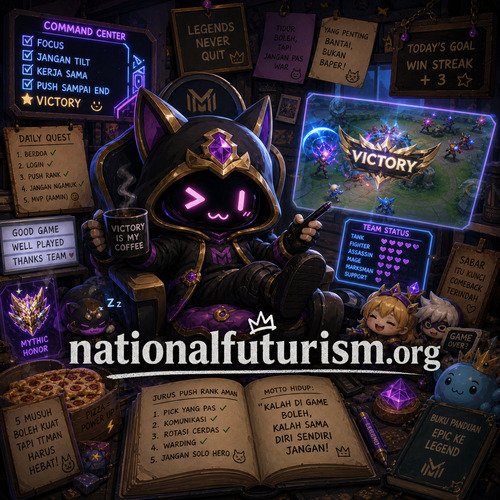
Understanding Why Combat Plans Must Remain Flexible
nationalfuturism.org – In Mobile Legends: Bang Bang, a team may enter a battle with a clear plan, yet the situation can change significantly within seconds. An enemy may reposition unexpectedly, a defensive ability may prevent the intended elimination, or a teammate may discover that the selected target is more difficult to defeat than anticipated. When these developments occur, continuing the original approach without reassessment can waste abilities, expose vulnerable heroes, and allow opponents to regain control of the engagement. Effective players therefore need to recognize when their initial plan has stopped producing useful results and determine whether another approach offers a better chance of success.
A common example occurs when a team attempts to eliminate an enemy marksman but discovers that the target is protected by several defensive abilities. The initial plan may have depended on quickly removing the marksman before the opposing team could respond. Once that opportunity disappears, repeatedly attacking the same target can become inefficient. The marksman may continue dealing damage from a safe position while the attacking team spends valuable resources without achieving a meaningful advantage. A better response may involve pressuring another opponent, forcing the defenders to reposition, or withdrawing until a more favorable opportunity appears.
Recognizing a failed approach requires more than observing that an enemy remains alive. Players should evaluate whether their actions are creating progress. An opponent who has been forced away from a useful position may already be contributing less to the fight, even if no elimination occurs. Conversely, an enemy who appears close to defeat may still be protected by teammates and difficult to finish safely. The team must distinguish between visible progress and actions that genuinely improve its position.
Players should also consider how their own resources are changing. If several important abilities have already been used, continuing the same engagement may leave the team without the tools needed to respond to a counterattack. If health has fallen significantly or the formation has become separated, the cost of continuing may have increased beyond the original expectation. These changes can justify modifying the plan even when the enemy’s behavior remains relatively consistent.
Adaptation does not mean abandoning every plan at the first sign of resistance. Some strategies require sustained pressure before they become effective, and changing direction too quickly can prevent the team from completing a reasonable objective. The important question is whether the current approach still offers sufficient value relative to its cost. If the team is steadily gaining ground and maintaining a safe formation, continuing may remain appropriate. If the same actions repeatedly fail while the team’s position deteriorates, a different response becomes increasingly valuable.
Communication helps teammates recognize these changes at the same time. A player who notices that the intended target has become difficult to reach can signal the need to reconsider the engagement. Other teammates can then adjust their movement and ability usage instead of continuing to follow an outdated plan. This shared awareness reduces the risk of players making individually reasonable decisions that work against one another.
The strongest teams do not depend on every engagement unfolding exactly as expected. They begin with a coherent plan, observe the results, and make adjustments when the situation changes. By recognizing the difference between temporary resistance and a genuinely ineffective approach, players can preserve their resources and maintain control over their decisions throughout a fight.
Distinguishing Between a Changing Opportunity and a Genuine Emergency
During a team fight, not every unexpected development requires an immediate change of direction. An enemy moving away from the original target may create a new opportunity, while a teammate taking damage may create a genuine emergency. Confusing these situations can lead to unnecessary movement, wasted abilities, and poor coordination. Players must evaluate the significance of each development before deciding whether it should change the team’s priorities.
A changing opportunity usually creates the possibility of gaining additional value without demanding an immediate response. For example, an opponent may move away from the main group and become easier to pressure. A player might recognize that the enemy formation has opened a temporary gap, creating an opportunity to attack a vulnerable target or improve positioning. Such opportunities are valuable, but they should be evaluated alongside the team’s original objective rather than pursued automatically.
A genuine emergency is different because delaying the response may create an immediate and serious disadvantage. If a teammate is about to be eliminated, an enemy has reached the primary damage dealer, or a defensive structure is under an urgent threat, the team may need to change direction quickly. Even then, players should consider which response can actually solve the problem. Several teammates chasing an attacker who has already escaped may accomplish little, while a well-timed defensive ability or a short repositioning movement may be sufficient.
The consequences of a response matter as much as the initial event. Helping a teammate may prevent an elimination, but the movement could also expose another vulnerable player. Pursuing a weakened opponent may secure an elimination, but the chase could pull the team away from a valuable objective. These decisions require players to consider both the immediate benefit and the opportunity cost of acting.
Players should also recognize that the importance of an event can change rapidly. A teammate who initially appears safe may become vulnerable when additional enemies arrive. An enemy who seems threatening may lose the ability to continue after spending important abilities. Rather than treating the first interpretation as permanent, players should update their judgment as new information becomes available.
This process becomes easier when the team maintains a shared understanding of its most important responsibilities. If everyone knows which teammate must be protected, which opponent is creating the greatest danger, and what the engagement is intended to accomplish, changing direction becomes less confusing. Players can identify when an unexpected event deserves a response without abandoning every other responsibility.
A useful habit is to ask whether the development changes the team’s ability to achieve its immediate goal. If it does not, the team may be able to continue its original approach while monitoring the situation. If it significantly changes the risks or removes a crucial opportunity, a tactical adjustment may be necessary. This method helps players respond quickly without allowing every movement or damage exchange to disrupt their overall coordination.
Preserving Team Structure While Making Rapid Adjustments
Adaptation can become counterproductive when every player changes direction independently. One teammate may pursue a weakened enemy, another may return to protect the backline, and a third may continue attacking the original target. Although each action might appear reasonable from an individual perspective, the combined result can leave the team scattered and unable to support any single objective effectively. The challenge is to adjust the plan without losing the structure that allows teammates to work together.
Team structure does not require every hero to remain in a fixed position throughout the engagement. Instead, it means that players understand how their actions relate to one another. A frontline hero may move forward to create pressure, while a damage dealer maintains a safer position and a support prepares to respond to incoming threats. These responsibilities can change, but the team should preserve enough connection that players can benefit from each other’s actions.
When a new opportunity appears, the team should determine whether it requires one player to respond or whether a coordinated movement is necessary. If an enemy becomes exposed near the edge of the fight, a nearby hero may be able to apply pressure without requiring everyone else to follow. If the opening creates a realistic chance to eliminate an important target, more teammates may need to adjust together. The scale of the response should match the value of the opportunity and the risks involved.
Players should also avoid changing several major responsibilities simultaneously unless the situation demands it. If the frontline abandons its position, the backline may become exposed. If the support leaves the damage dealer without protection, the team may lose its ability to sustain pressure. Adjustments should account for these dependencies rather than treating each player’s movement as an isolated choice.
Communication can make rapid adaptation more coordinated. A short signal about changing targets, withdrawing, or protecting a teammate can help others understand the new direction. The purpose is not to explain every detail during a fast engagement, but to prevent major misunderstandings. When teammates share the same immediate objective, they can make their individual decisions with a clearer understanding of what the rest of the team is attempting to accomplish.
There are also moments when preserving structure means refusing to follow an opportunity. If an enemy retreats into a dangerous area and the team cannot maintain support while pursuing, allowing the target to escape may be preferable to risking several eliminations. Similarly, a player who notices that the team is becoming separated may need to return to a safer position instead of continuing an isolated attack.
A well-structured team remains connected through changing circumstances because players understand both their individual responsibilities and their shared purpose. This balance allows them to make rapid adjustments without becoming disorganized. By changing only what the situation requires and maintaining support between teammates, players can preserve the effectiveness of their composition even when an engagement develops unexpectedly.
Changing Target Priorities When the Intended Elimination Becomes Unavailable
Target selection often begins before a fight, but the best target can change once combat starts. An enemy may receive unexpected protection, retreat behind a defensive formation, or move into a position where attacking them would expose the team to excessive danger. When this happens, players should reconsider whether continuing the pursuit remains worthwhile. The goal is not to abandon important targets permanently, but to choose the opponent whose current position offers the greatest realistic value.
A team may initially focus on an enemy marksman because removing that hero would reduce the opposing team’s sustained damage. However, if the marksman remains protected by a tank and support, repeated attempts to reach the target may become inefficient. Meanwhile, an enemy mage may move closer to the frontline or use important abilities, creating a more accessible opportunity. Attacking the mage may reduce the pressure on the team and force the opposing formation to adjust, even if the original marksman survives.
Players should consider more than health when comparing targets. A low-health enemy may be difficult to reach, while a healthier opponent may be exposed and vulnerable to coordinated attacks. The potential consequence of an elimination also matters. Removing a hero who provides important control may be more valuable than finishing an opponent whose current contribution is limited. These judgments depend on the specific heroes, abilities, and circumstances involved.
The team’s available resources should influence target changes. If several important abilities have already been spent trying to reach the original target, the team may need to select a more accessible opponent rather than repeating the same sequence. Conversely, if the intended target becomes exposed after using a defensive ability, continuing the original plan may suddenly become more reasonable. Players should respond to the current situation instead of treating their first decision as an unchangeable commitment.
Target changes should also remain coordinated. If one player switches to a new opponent while the rest of the team continues attacking the original target, the team may divide its damage and fail to eliminate either enemy. A brief signal or a clear indication through movement can help teammates recognize the intended shift. However, players should avoid switching targets repeatedly without a meaningful reason, as constant changes can waste abilities and reduce the team’s ability to complete an elimination.
There are situations where maintaining pressure on the original target remains valuable even without an immediate elimination. Forcing a marksman away from a useful position may reduce the enemy’s damage output, while pressuring a support may prevent the opponent from assisting the rest of the team. The team should distinguish between an unsuccessful elimination attempt and pressure that still produces meaningful results.
Effective target adaptation involves evaluating accessibility, strategic importance, resource availability, and the team’s ability to coordinate damage. By choosing targets according to current conditions, players can avoid wasting their strongest abilities on opponents who are temporarily difficult to reach and take advantage of openings that emerge during the engagement.
Adjusting Defensive and Offensive Responsibilities During Combat
A team fight can change direction when the opposing team commits more resources than expected or when one of the player’s teammates becomes the main target. In these situations, the team may need to shift between offensive and defensive responsibilities without completely abandoning its original objective. A player who was initially applying pressure may need to protect an ally, while a teammate who was holding a defensive position may have an opportunity to attack an exposed opponent.
The key is to understand that offensive and defensive actions are connected. Protecting a damage dealer may preserve the team’s ability to continue attacking, while forcing an enemy to reposition can reduce the pressure on vulnerable teammates. A defensive action is not necessarily a loss of initiative, and an offensive action is not automatically productive. The value of each decision depends on how it changes the team’s ability to control the engagement.
Consider a situation in which an enemy assassin reaches the backline earlier than expected. The tank may need to interrupt the assassin, while a fighter helps create distance and the damage dealer repositions. Once the immediate threat has been controlled, the team may regain the opportunity to attack the enemy frontline or pursue another exposed target. Continuing to focus exclusively on offense during the initial threat could lead to the elimination of the team’s main damage source, while remaining entirely defensive after the danger has passed may waste a useful opportunity.
Players should also avoid assigning every defensive responsibility to the same teammate. If one hero must protect multiple allies simultaneously, the team may become dependent on a single ability or position. Other players can contribute by maintaining safer spacing, interrupting approaching enemies, or avoiding unnecessary movements that increase the burden on the protector. Shared responsibility makes the team more resilient when several threats appear at once.
Resource timing influences these decisions. A defensive ability may be necessary to prevent an immediate elimination, but using it can reduce the team’s offensive options afterward. Players should consider whether the ability is likely to solve the current problem and whether a less costly response is available. However, they should not preserve an important ability so rigidly that a teammate is eliminated while the skill remains unused.
The team should also recognize when defensive actions have achieved their purpose. If the enemy’s attack has been interrupted and the backline is safe, the players can reconsider whether continuing to retreat is necessary. Returning to an offensive position may allow them to regain control before the opponents recover. The transition should be based on the current danger rather than an automatic preference for either aggression or caution.
Effective combat adaptation depends on understanding when a responsibility has become more important than another. By shifting between offense and defense deliberately, players can protect essential teammates while preserving opportunities to punish enemy mistakes. This flexibility helps prevent a single unexpected development from determining the entire engagement.
Learning From Tactical Adjustments Without Overcomplicating Future Decisions
Every engagement that requires an unexpected adjustment provides information about the team’s habits, strengths, and weaknesses. Reviewing these situations can help players recognize which changes were useful and which created additional problems. However, learning from an engagement does not require analyzing every movement or developing an elaborate response for every possible scenario. The most valuable lessons are specific enough to influence future decisions without overwhelming players during actual combat.
A useful review begins with identifying the moment the original plan stopped working. Perhaps the intended target became protected, the frontline was forced away, or the team discovered that its available abilities were insufficient for the chosen approach. The next question is whether the team recognized the change early enough to respond. If players continued following the original plan for too long, they may need to improve their awareness of the conditions that indicate an approach is becoming inefficient.
The review should also examine whether the adjustment solved the problem. Switching targets may have reduced pressure on the backline, but it may also have divided the team’s damage. Retreating may have prevented additional eliminations, yet the team might have surrendered a position that could have been held safely. The outcome alone does not provide a complete answer. Players should evaluate whether the decision was reasonable given the information available at that moment.
Individual responsibility matters as well. A player who notices an enemy becoming exposed can communicate the opportunity, but the rest of the team must still determine whether following that target is worthwhile. Similarly, a teammate who requests defensive assistance should understand how the request affects the team’s remaining responsibilities. Reviewing these interactions can reveal whether the problem involved poor judgment, unclear communication, or simply a situation where no option was especially favorable.
Players should then choose one practical improvement. If the team repeatedly continues attacking a target after the opportunity disappears, the next match might focus on recognizing when the target has become inaccessible. If teammates frequently change direction independently, the improvement might involve communicating major target changes more clearly. A narrow objective is easier to apply consistently than a general instruction to adapt better.
It is also important to recognize successful decisions. A team may have avoided an unnecessary fight, preserved an important ability, or protected its damage dealer despite losing the original opportunity. These outcomes should be acknowledged because they demonstrate which habits are worth repeating. Focusing exclusively on mistakes can obscure the progress that already exists and encourage players to change effective behavior unnecessarily.
Over time, reviewing tactical adjustments can improve the team’s ability to recognize patterns and respond more naturally. Players become better at identifying when a plan remains useful, when a new opportunity deserves attention, and when preserving resources is more valuable than continuing an unfavorable engagement. The purpose of review is to make future decisions clearer, not to make every fight feel like a complicated calculation.
Conclusion Mobile Legends Mid-Engagement Adaptation: Changing Tactical Decisions Without Losing Team Coordination
Mid-engagement adaptation is an essential skill in Mobile Legends because a fight rarely unfolds exactly as players expect. An intended target may become difficult to reach, an enemy may create an unexpected threat, or the team’s available resources may change the value of the original approach. Continuing without reassessment can waste abilities and expose teammates, while changing direction too frequently can create confusion and prevent the team from completing meaningful actions.
The most reliable response begins with recognizing when the original plan has stopped producing sufficient value. Players should evaluate the accessibility of their target, the resources they have already committed, and the consequences of continuing. They should also distinguish between developments that create new opportunities and emergencies that require immediate attention. This prevents the team from reacting equally to every unexpected event.
Maintaining team structure is equally important. Tactical adjustments should preserve the connection between frontline pressure, damage output, and protection. Players can change responsibilities when necessary, but they should understand how their movements affect their teammates. Clear communication and deliberate coordination help the team respond as a unit instead of splitting into unrelated actions.
Target priorities and defensive responsibilities should remain flexible throughout combat. A different opponent may become more valuable when the original target is protected, while a defensive action may preserve the team’s ability to attack afterward. Players who understand these relationships can make changes that improve the overall engagement rather than simply reacting to the most visible event.
Finally, reviewing difficult engagements helps turn unexpected situations into useful experience. By identifying when the original approach stopped working, evaluating the quality of the adjustment, and selecting one practical improvement, players can develop more reliable judgment without overcomplicating their decisions.
Successful adaptation is not about predicting every possibility before a fight begins. It is about observing what actually happens, recognizing when circumstances have changed, and making a coordinated decision that fits the new situation. With flexible planning, clear responsibilities, and thoughtful reassessment, players can maintain team effectiveness even when the battle takes an unexpected direction.